
What Are TMT Bars: Strength and IS 1786 Standards Explained
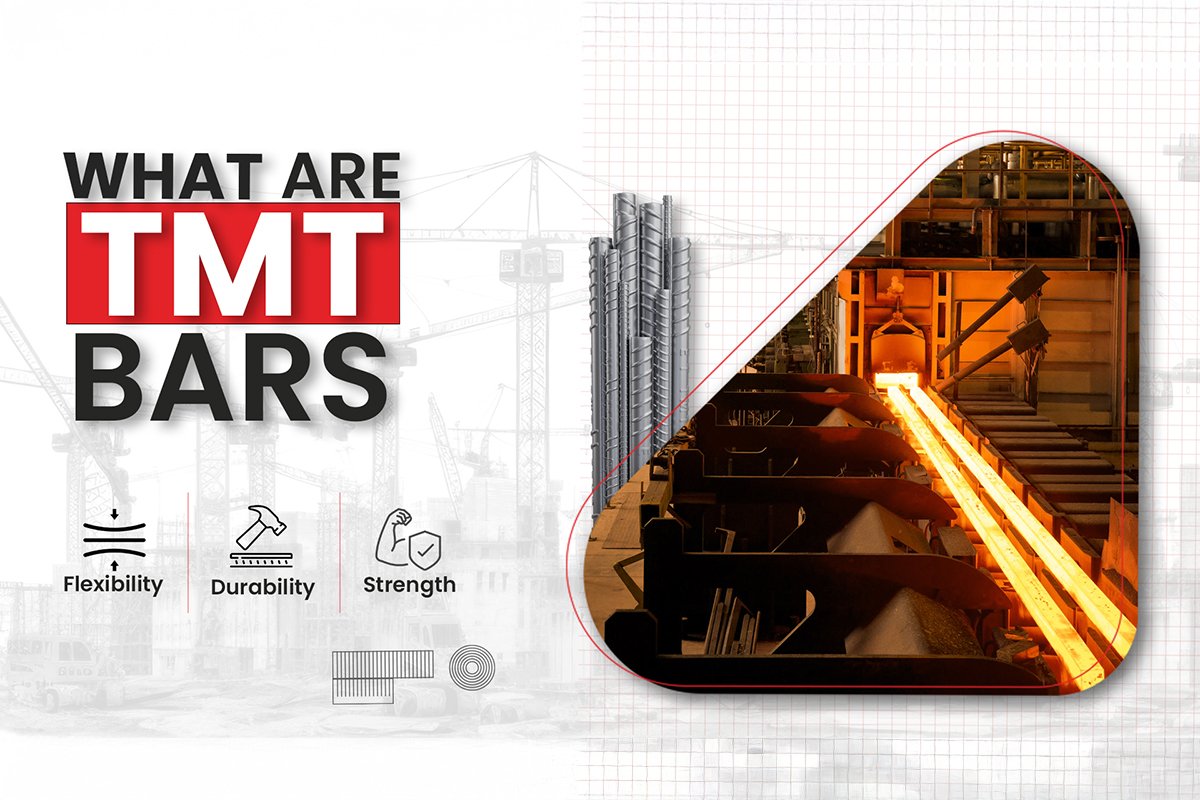
In modern construction, safety, durability, and performance are non-negotiable. The backbone of any reinforced concrete structure is its TMT steel bars, also called rebars, which are thermo mechanically treated bars for superior strength and durability.
They are widely used in reinforced concrete structures to provide support, resist tension forces, and ensure structural stability. In addition to the features mentioned, the use of TMT bars in construction offers a wide array of advantages, which will be discussed later in this blog.
But what sets TMT bars apart, and why is compliance with IS 1786 standards critical? This comprehensive guide explains everything you need to know about TMT bars.
Understanding Thermo Mechanically Treated Bars (TMT Steel Bars)
TMT bars are a specialized form of steel reinforcement that combine strength, flexibility, and durability. They undergo a process called thermo-mechanical treatment, giving them superior mechanical properties compared to conventional steel.
These bars provide exceptional durability, resilience to seismic forces, and superior flexibility, ensuring the structural integrity of various kinds of buildings and infrastructure.
Here is a detailed overview of how TMT bars are made:
Process overview
1. Raw Material Selection and Charging: The process begins with the selection of quality raw materials such as iron ore, coal, and limestone, which are melted together in a blast furnace to molten steel.
2. Primary Steel Making: The molten steel is refined in a basic oxygen furnace (BOF) or an electrical arc furnace (EAF).
3. Casting: The refined steel is then cast into billets, which are long, rectangular pieces suitable for rolling.
4. Hot Rolling: The billets are heated to about 1200 °C and passed through a series of rolling mills to gradually reduce their cross-sectional area, shaping them into the required size and form of bars.
5. Self-Tempering: Residual heat from the hot core tempers the outer martensitic layer as the bars leave the quenching box. This self-tempering relieves internal stresses and imparts ductility while preserving strength.
6. Atmospheric Cooling: The bars are then allowed to cool naturally in the open air on the cooling bed. During this stage, the core transforms into a ferritepearlite structure, resulting in a composite bar with a tough outer surface and a ductile inner core.
7. Cutting & Inspection: After cooling, the bars are cut to desired lengths and subjected to rigorous quality checks for strength, flexibility, and adherence to standards such as IS 1786.
After this rigorous process, the TMT bars are ready for bundling, storage, or dispatch and transportation. Throughout all the steps, strict measures are taken to maintain the quality of the TMT bars.
What IS 1786 Standards Mean for TMT Steel Bars
IS 1786 is the Indian standard that governs high-strength deformed steel bars for concrete reinforcement. It specifies:
- Mechanical properties: Yield strength, tensile strength, elongation, and bendability.
- Chemical Composition: Carbon, sulfur, phosphorus, and other elements that affect strength and corrosion resistance.
- Quality Control: Testing methods to ensure consistent performance in construction.
Compliance with IS 1786 ensures that TMT bars consistently meet structural safety requirements, perform reliably under stress, and are suitable for both residential and industrial applications.
How TMT Rebar Gets Its Strength
The unique combination of strength and flexibility is what makes TMT rebar essential in RCC construction.
Thermo-mechanical treatment
Core-to-surface structure
- Outer Layer: Martensitic, high tensile strength for resistance against stress.
- Inner Core: Ferrite-pearlite, providing flexibility and shock absorption.
Strength vs. ductility
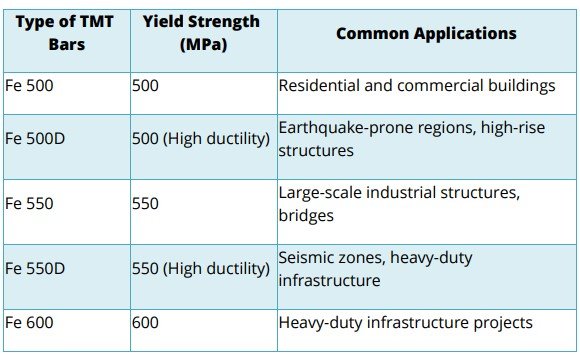
Types of TMT Bars Used in Construction
Why Concrete TMT Reinforcement is Critical
- Load-Bearing Support: Enhances overall structural strength
- Earthquake Resistance: Ductile core absorbs shocks, reducing building failure risk.
- Fire Resistance: Retains structural integrity under high temperatures.
Corrosion Resistant TMT Bars: Why They Matter
Corrosion can compromise structural integrity over time. Corrosion resistant TMT bars address this by offering:
- Low-carbon and impurity-controlled composition.
- Micro-alloying for enhanced durability.
- Anti-corrosive surface treatment for coastal and humid areas
Features of corrosion-resistant TMT
Here are the key features of corrosion-resistant TMT bars.
1. Special Surface Treatment: Coated with anti-corrosive materials or use of special alloys during manufacturing to resist rust and chemical attack.
2. Enhanced Durability: Prolongs the lifespan of structures, even in harsh environments like coastal, humid, or industrial areas.
3. Maintained Structural Strength: Prevents deterioration due to corrosion, ensuring the steel retains its load-bearing capacity over time.
4. Reduced Maintenance: Lowers repair and upkeep costs by minimizing the risk of weakening or damage from rust.
5. Better Bonding with Concrete: Clean and corrosion-free surface improves the grip of TMT bars with concrete, contributing to the strength of the structure.
6. Resistance to Aggressive Environments: Effective in environments rich in chlorides, sulfates, or polluted atmospheres
These features make corrosion-resistant TMT bars especially valuable for constructing bridges, marine structures, underground facilities, and buildings exposed to moisture or chemicals.
When to Use Them
- Coastal or high-humidity regions
- Industrial areas with chemical exposure
- Long-term infrastructure projects requiring minimal maintenance
Why ET TMT Bars Are Trusted in Structural Reinforcement
ET TMT bars combine innovation, expertise, and quality control:
- Product strengths: High tensile strength, superior ductility, and excellent bonding with concrete.
- Manufacturing quality: Advanced ELdFOS™ process and rigorous quality testing ensure uniformity and durability.
- Compliance with IS 1786: Guaranteed standards for mechanical and chemical properties.
Builders and architects rely on ET TMT for safe, long-lasting structures that meet modern construction demands.
Conclusion
Understanding what is TMT bars, their grades, and IS 1786 standards are, is critical for safe and durable construction. Whether you are an architect, builder, or general enthusiast, selecting the right TMT steel bars, including corrosion-resistant options, ensures your structures stand the test of time.
With ET TMT bars, you combine strength, reliability, and innovation, making every project safer, and stronger